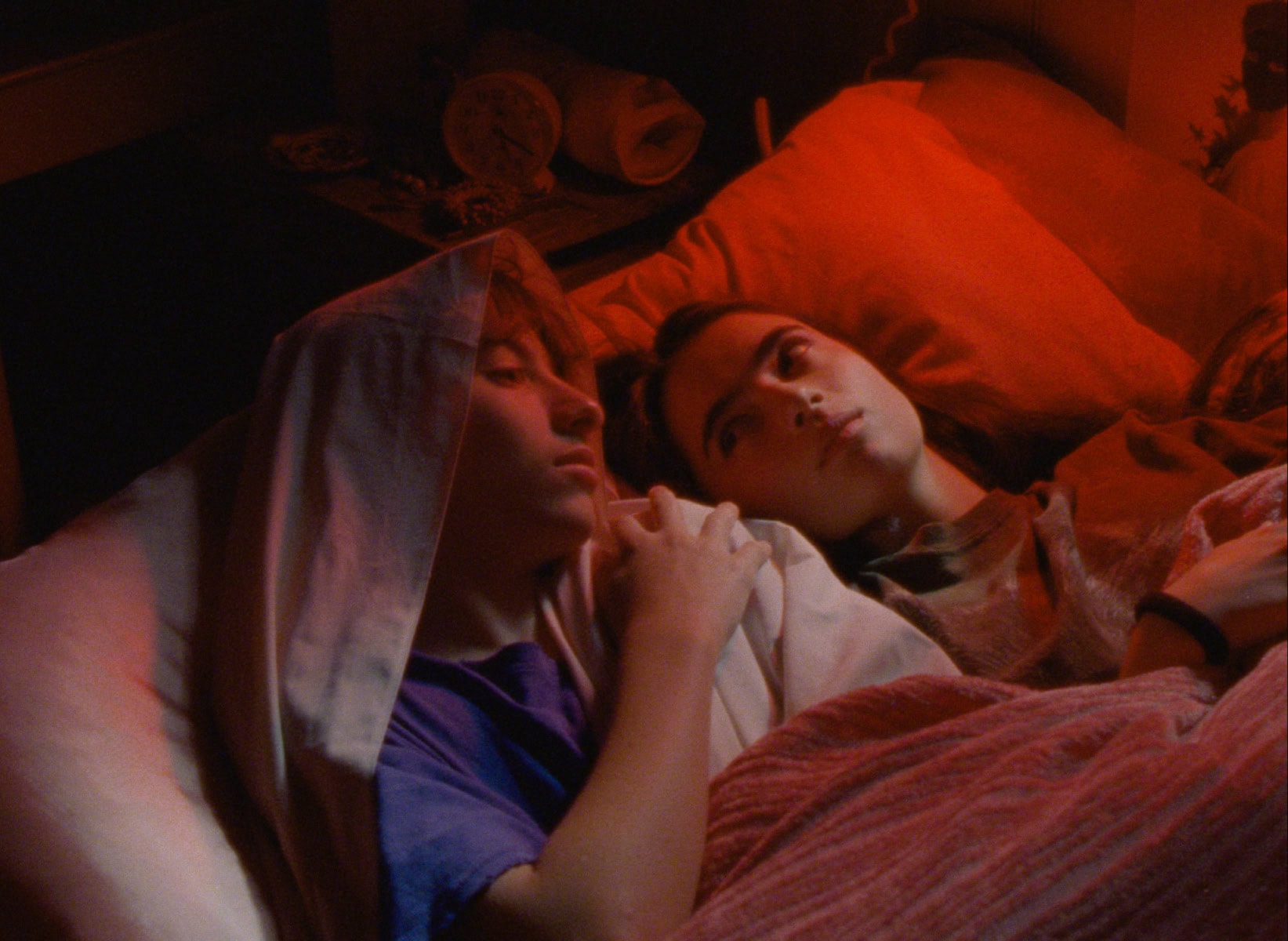
Loosely based on a graphic novel by Bastien Vives, Falcon Lake is another in a long line of coming-of-age tales about the discovery of first love. But Charlotte Le Bon, an actor making her feature directing debut, cloaks her take on youthful summer romance in an aura of ominous foreboding. The titular Quebecois lake is the setting for the budding relationship between Bastien (Joseph Engel) and Chloé (Sara Montpetit), which is complicated by the latter’s insistence that the place is haunted by the ghost of a boy who drowned there.
It’s this macabre tale that informs the tenor of Falcon Lake, as Le Bon blurs genre to craft a bildungsroman whose deeply pensive tone and eerie sound design and visual compositions lend it the rhythms of a ghost story. But Le Bon’s genre-bending maneuvers also prove to be frustrating at times, as the film feels just as bracingly romantic as it does oppressively morose.
With their mothers being old friends, Bastien and Chloé get to know each other while the former’s family stays in the latter’s lakeside cottage for an extended visit. Le Bon and co-writer François Choquet depict their protagonists and their mindsets with an exquisite sensitivity. Sometimes transcending the film’s overall gloomy tone, the characters’ sexually charged conversations and behavior are defined by a refreshingly non-judgmental frankness.
Throughout, the filmmakers elucidate the youthful urge to say or do anything in order to impress someone. That includes Chloé’s story of the drowned child, which her mother, Louise (Karine Gonthier-Hyndman), insists to Bastien is something that her daughter made up. These moments are even used by Le Bon and Choquet as a means to not only surprise the characters, but the audience as well, ultimately leading us to share the reactions of those on screen, as in a memorable scene where the normally reserved Bastien stuns Chloé and others at a party by unexpectedly flaunting his elaborate and sensational dance moves.
Falcon Lake is perceptive about teenage life, but given that it predominantly focuses on the flirtations and dalliances of two teens falling in love for the first time, and features them playing around pretending to be a ghost, it’s frustrating that the film’s aesthetic rarely reflects this playfulness. In the end, Falcon Lake is almost suffocated by a needlessly funereal mood. Even the film’s gimmicky use of the full-frame aspect ratio seems pointless, suggesting nothing more than a blatant attempt to merely look different than other modern teen romances.
At worst, Falcon Lake locks itself into a state of self-seriousness that comes to verge on the unintentionally humorous, as in a bonfire party late in the film, where Bastien and Chloé attempt to make each other jealous after a fight. The entire scene is pitched, like so many others throughout the film, at the level of some kind of grave tragedy. And the inadvertent effect of the brooding, almost overbearing gloom that shrouds Falcon Lake is that it manages to sap the life out of its initially carefree depiction of young people’s emotional lives.
Since 2001, we've brought you uncompromising, candid takes on the world of film, music, television, video games, theater, and more. Independently owned and operated publications like Slant have been hit hard in recent years, but we’re committed to keeping our content free and accessible—meaning no paywalls or fees.
If you like what we do, please consider subscribing to our Patreon or making a donation.