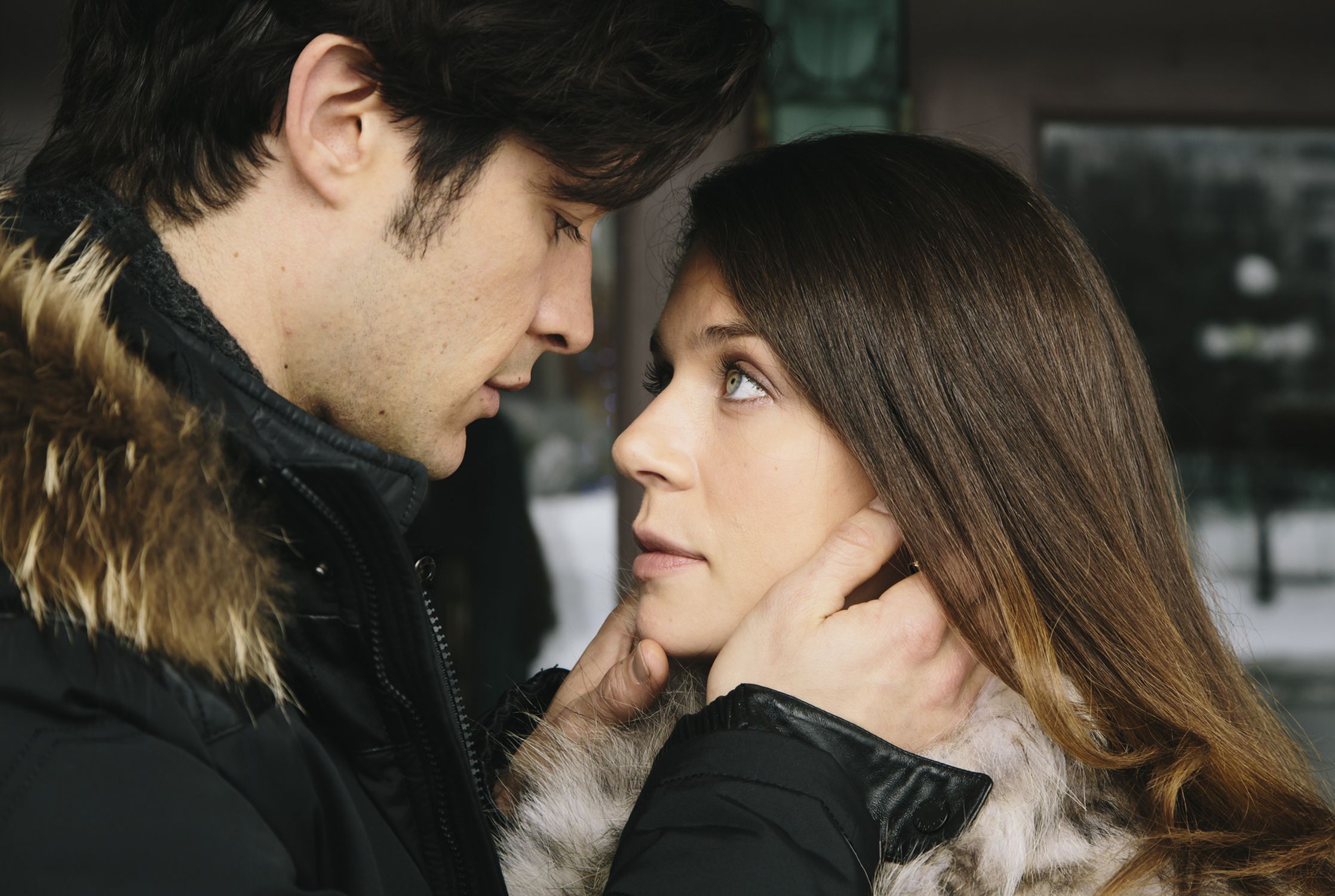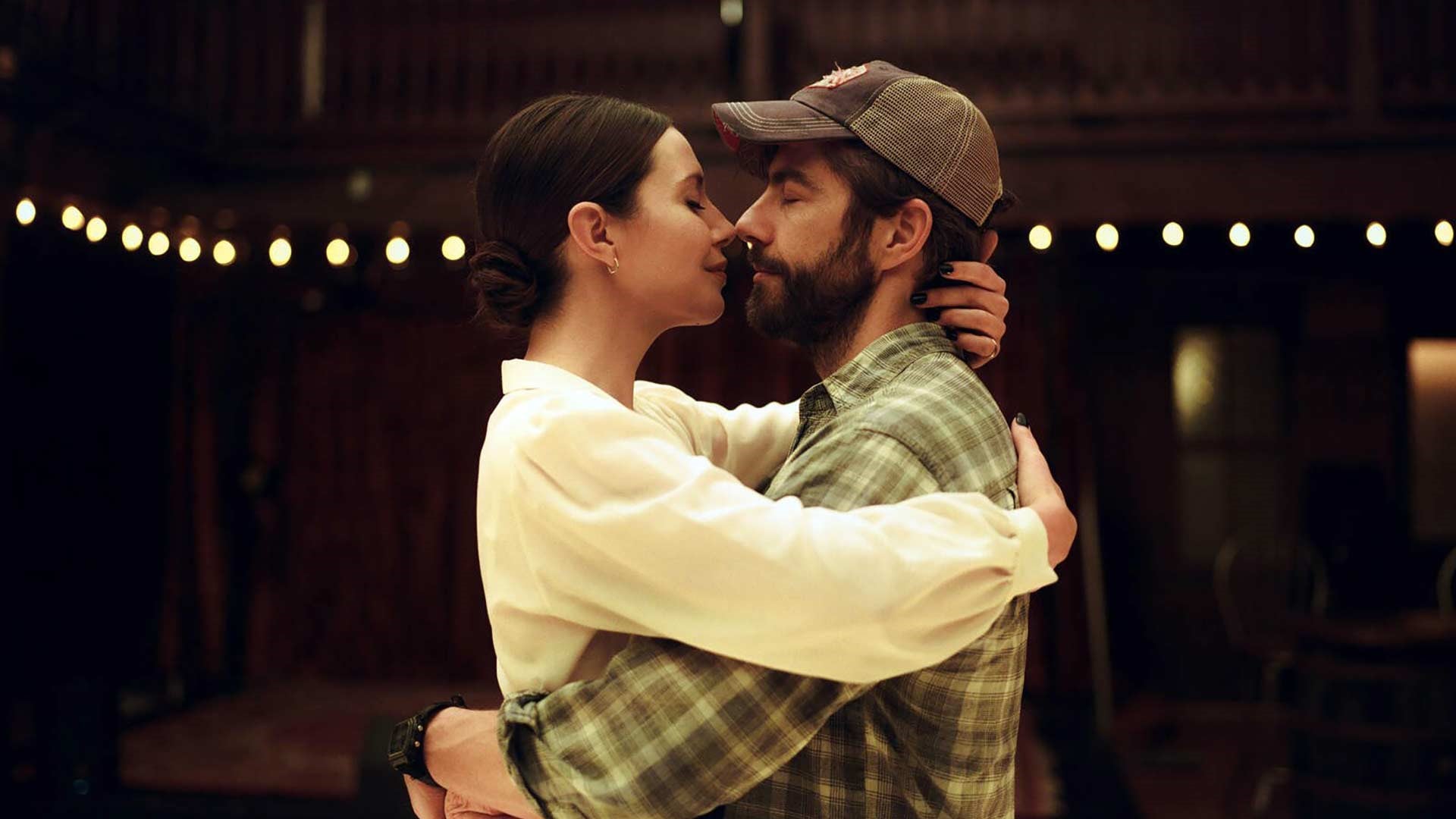
The premise of writer-director Monia Chokri’s Quebec-set The Nature of Love makes it sound like your standard-issue rom-com. Sophia (Magalie Lépine-Blondeau), a university philosophy teacher stuck in a static relationship with Xavier (Francis-William Rhéaume), is one day suddenly swept off her feet by Sylvain (Pierre-Yves Cardinal), the hunky, charming contractor tasked with renovating Sophia and Xavier’s lakeside getaway.
But after scenes depicting Sophia lecturing her classes about history’s great thinkers and their philosophies of love, it becomes clear that Chokri isn’t so much interested in the central couple’s meet-cute as she is in all that the affair triggers for Sophia. And much like what Todd Haynes’s Far from Heaven did with the aesthetic of the Sirkian Hollywood melodrama, The Nature of Love engages with the stylings and bubbly tonality of the classic rom-com in ironic fashion, along the way exploring complex aspects of human behavior.
The initial meeting and subsequent fling between Sophia and Sylvain is a whirlwind, with Chokri utilizing roving tracking shots and old-school zooms—complemented by rapid editing—to cultivate an atmosphere of kinetic energy. By having us get swept up in this aesthetic showmanship, Chokri keys us to Sophia’s in-the-moment reactions to the exhilaration of the affair, as she finds herself unable to think straight and acting purely on libidinous impulse.
Sophia remarks during a steamy bit of lovemaking between her and Sylvain that what she’s doing is irrational—and it’s indeed that very quality that marks Sophia’s further acts throughout The Nature of Love. She eventually leaves Xavier and settles into a casual relationship with Sylvain, and Chokri often shows Sophia engaging in various sexual exploits with Sylvain and, separately, other men. These dalliances are seemingly random, including a shocking experiment in S&M with Sylvain and a one-night stand with a grocery store clerk. Through it all, Chokri doesn’t set out to judge Sophia’s behavior, only suggest that the woman, for all her knowledge on the subject, truly doesn’t comprehend the nature of love as it pertains to her.
Despite its philosophical and dialectical concerns, the film is never didactic, and that’s in large part due to it being often very funny, with Chokri playfully ribbing the different social milieus that Sophia finds herself in, mainly at dinner parties. Within Sophia’s upper-class circle of friends and family, the conversations are marked by amusingly snobby, overanalyzed opinions, while those in Sylvain’s scrappier blue-collar world are defined by a comically unfiltered crassness. And even though some minor characters come off as stereotypes, the scenes’ emphasis on folks’ more grating mannerisms encapsulate—and in a way that’s oddly compassionate—that both social classes have their fair share of imperfections.
And for all the prickliness that arises between the characters precisely due to their individual imperfections, Chokri tenderly acknowledges that they’re all united by a shared obsession of sorts. At a party that opens the film, a guest, Joséphine (Lubna Playoust), posits that love is the one common thread connecting every human across all countries, cultures, and, yes, classes. That’s certainly true in the case of Sophia and Sylvain, since love was the force that bridged the social gap and brought them together. But as The Nature of Love shows, it’s navigating that love, trying to make sense of it, that opens up a whole other can of worms.
Since 2001, we've brought you uncompromising, candid takes on the world of film, music, television, video games, theater, and more. Independently owned and operated publications like Slant have been hit hard in recent years, but we’re committed to keeping our content free and accessible—meaning no paywalls or fees.
If you like what we do, please consider subscribing to our Patreon or making a donation.