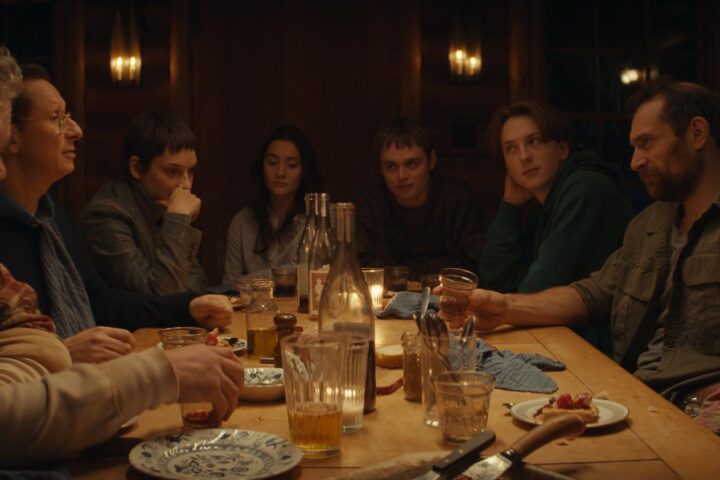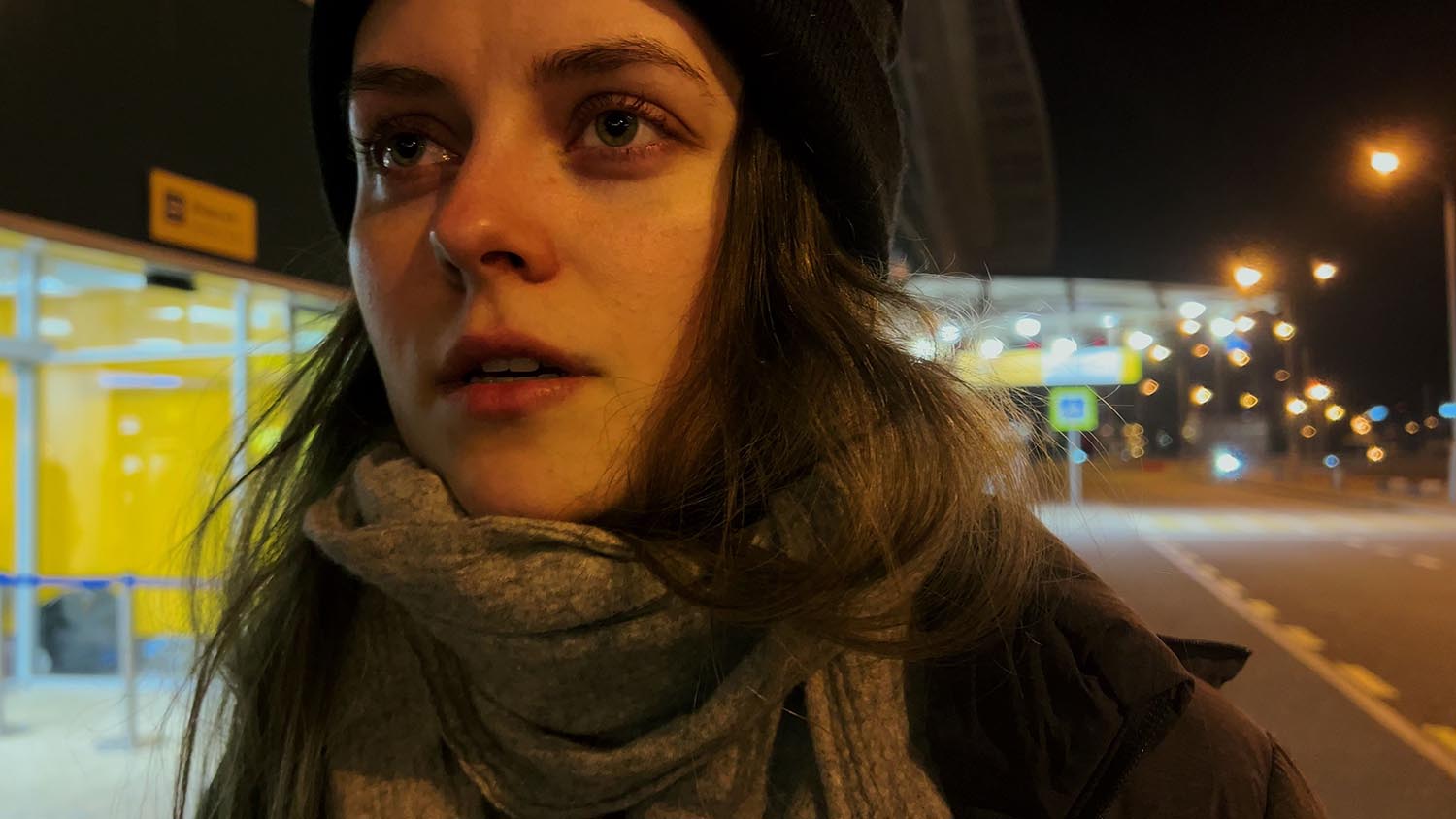
History unfolds with on-the-ground immediacy in director Julia Loktev’s first feature since 2011’s The Loneliest Planet, as well as her second nonfiction work after 1998’s Moment of Impact. Running five-and-a-half hours and split into five chapters, My Undesirable Friends: Part I—Last Air in Moscow chronicles the hardscrabble efforts and eventual exile of a group of young Russian journalists who work for the independent news channel TV Rain.
“The world you’re about to see no longer exists,” Loktev narrates in the first scene. For there was no way to know, when filming commenced in 2021, that she would be in a prime position to observe the Vladimir Putin-instigated invasion of Ukraine, in addition to the draconian crackdown that followed on any and all dissenting voices. Not that the situation for reporters refusing to toe the party line was sunshine and moonbeams beforehand. Much of the documentary’s first two chapters revolve around the ridiculous restrictions that Putin’s authoritarian government concocted to keep alternative viewpoints in check.
In the public sphere, Putin and his cronies voice support for independent media. Yet outlets like TV Rain are forced to note, via verbal and textual disclaimers, that they’re “foreign agents” speaking against the purported societal consensus. Crackdowns by police are likely, and protest is sure to be met with bullying resistance at best or systemically sanctioned violence at worst. The absurdities of the situation are so ingrained and all-consuming that the venom-tipped sarcasm of the on-air reporters is evident in everything from their tone to their body language.
Loktev’s initial subject is her friend Anna Nemzer, a steely and tireless talk-show host who acts as a guide to TV Rain and its extended family. Nemzer spotlights people who are at the mercy of the Russian government’s restrictions on public demonstration, artistic expression, sexual preference, gender identity, and so on. She helps give voice to the voiceless, and the workspace Nemzer and her colleagues inhabit—with its often colorful and affectionately communal hustle and bustle—reflects their enduring comradeship. Everything this like-minded group does seems shaped by a belief that to better the world, in both local and global senses, is a constant forge.
The struggle is real, and there’s a degree, interestingly, to which My Undesirable Friends is itself an effort to get through. The first two chapters in particular are scattershot and unfocused, hopping around between Nemzer and her colleagues with a distinct lack of centeredness. It’s as if Loktev is trying to find the movie she’s making in real time—a justifiable approach, though at this length it often grates. Individual stories are compelling, as in the case of one reporter whose imprisoned husband acts as a sustained motivator even in the darkest of circumstances. Yet many of these threads, as Loktev noted in a recent interview when discussing the thoughts of some early viewers of the movie, very much feel colored by “reality show vibes.”
The drama is all surface, in other words. And what a surface, for sure. A literal life and death struggle that’s exceedingly of this moment. Yet the best documentaries tend to have formidable underlying narratives working in concert with their overlying ones. Think of Frederick Wiseman or Heddy Honigmann, both of whom can capture transfixing verité views of, say, a Michelin-starred restaurant (Menus-Plaisirs Les Troisgros) or the Père Lachaise cemetery (Forever) while simultaneously sculpting pointed, poetic countercurrents that touch on politics, personal struggles, and the beauties and horrors of being alive at specific moments in human history.
In a strange and very sad way, the Ukraine invasion gives Loktev’s movie its sense of purpose. From the third chapter on, My Undesirable Friends proceeds with grim inevitability, though the dourness is frequently commingled with energizing expressions of joy and solidarity. A New Year’s celebration that takes up the bulk of the documentary’s middle section has the raucous, liberating feel of one of Robert Altman’s cinematic tapestries with their harmonic din of voices and ever-shifting points of view. And the slow-dawning sense over the last two chapters that leaving home is the only avenue available to Loktev’s subjects gives My Undesirable Friends a rhythmic force that crescendos and ultimately concludes on a trenchant high note.
What’s left to do, and indeed what can be done, when effecting change from within is no longer possible? Loktev plans to explore that idea in a sequel subtitled Exile, which is still in production. One hopes that the follow-up project may help counterbalance and clarify some of this at times frustratingly uneven first part’s well-intentioned hemming and hawing.
Since 2001, we've brought you uncompromising, candid takes on the world of film, music, television, video games, theater, and more. Independently owned and operated publications like Slant have been hit hard in recent years, but we’re committed to keeping our content free and accessible—meaning no paywalls or fees.
If you like what we do, please consider subscribing to our Patreon or making a donation.